J Gadgets
J Gadgets |
| Hysteria over Swine Flu outbreak hits Twitter Posted: 27 Apr 2009 03:31 PM PDT
However, if you were to simply use Twitter to get your information, you'd hear a different story. The #swineflu tag is being used to post gossip, misinformation and outright lies about the situation, which is not the least bit useful and can even be harmful. Some social networking experts say people are using the flu outbreak to get more followers. Ever since the , it seems the prime motivation for many Twitter users is to get as many followers as possible, and posting tweets about the Swine Flu, regardless if they are accurate or not, seems to be the hot way to attract them right now. If you're worried about the outbreak, get your information from credible sources like your local health department or the CDC. Google has made available an interactive map that is charting the course of the outbreak, and most news outlets will have regular updates. Don't let a tweet on Twitter scare you!
|
| Apple Embedding YouTube Support into Quicktime Posted: 27 Apr 2009 02:43 PM PDT
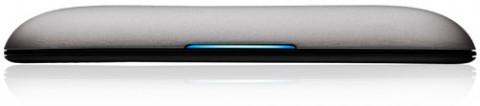
Apple is reportedly adding native support for YouTube in QuickTime by making it easier for users to convert and upload movies formatted optimally for the online video site. This comes in addition of the strong support already present in the iPhone and Apple TV products. What Apple gets is that YouTube steps back from Flash Video, an Adobe proprietary format (to be fair Flash video sucks in fullscreen HD). YouTube gets support from a powerful brand with a lot of content creators. YouTube might also get “better” video uploads, meaning that files are optimally formatted for YouTube might even use less storage space. (Note: the image above is just a concept) Permalink: |
| Tracking Swine Flu pandemic on Google Maps Posted: 27 Apr 2009 02:33 PM PDT The H1N1 Swine Flu pandemic has created a lot of anxiety at the moment. But thanks to the technology we have these days, you can now see the cases spreading in real time on (once the WHO (World Health Organisation) has declared them). The current H1N1 Swine Flu has been on the the headlines in the last couple of days. The H1N1 Swine Flu is a mutation of a port virus that jumped from pigs to humans. Already 103 people have died in Mexico, if you’re cautious about this outbreak and want to keep track of the spread of this possible pandemic, the below is a quick legend to looking at the Swine Flu tracking map on Google. The different colour on the map indicate the following:
via Everyone: Folks, we’re having an issue showing videos in our feed right now, this is since we upgraded to Wordpress 2.7. We hope to fix it soon, meanwhile if you see a blank video slot, just click on the post’s link and you will see it properly on our site, sorry about this! Written by: Tell us what you think about the post you’ve just read: Related posts |
| Washable Keyboard Lets You Clean The Dirtiest Computing Spot Posted: 27 Apr 2009 02:27 PM PDT  There is little doubt that keyboards (and mice) have to be the most germs-prone computing equipement that you own, but if you’re scared of germs, or if you like to eat Burgers while typing, the Silver Seal Washable keyboard might come in handy. Yes, as the image shows, you don’t have to take any precautions before using liquid and if that wasn’t enough it is made of an anti-bacterial material. We suspect that most people will simply use it against coffee spills or in rugged environments. Spotted at Firebox.com Related: Permalink: |
| GE Uses Holographic Storage To Acheive a 100-Fold Coost in Optical Storage Posted: 27 Apr 2009 02:17 PM PDT  At the moment, the expected cost for this new medium is 10c/GB, which is equivalent to a 1TB drive (street price). Other players in this space include since 2005. Permalink: |
| Seagate Replica for Windows is like Time Machine Posted: 27 Apr 2009 01:38 PM PDT If you use a PC but have been envious of those Apple users that have been able to take advantage of Time Machine backup, you’re now in luck. , which offers Time Machine-like storage for PCs.
The Replica makes it so you can restore documents, applications and various other items should your PC ever crash. It works in a continuous backup fashion, so you don’t have to manually back up your data–though you can if you want. You can also use it to restore individual files that you may have deleted by mistake. It works with Windows XP or Vista and comes in 250GB and 500GB versions that will retail for $129.99 and $199.99, respectively. The latter of which is intended for multi-PC back up and includes a dock. Both will be available in May. Relevant Entries on SlashGear |
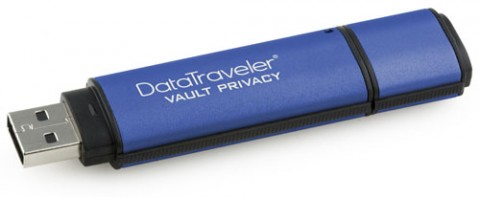
| Kingston DataTraveler Vault Privacy now works with Mac Posted: 27 Apr 2009 01:26 PM PDT If you’re a fan of Kingston DataTraveler USB storage but weren’t ever able to use them because you’re an Apple user, you’ll be pleased to hear the company has come around and are of one of their popular storage devices.
The device in question is the DataTraveler Vault Privacy Edition (DTVP) USB Flash Drive. A mouthful, for sure, but good to know for avid Mac users that wanted another storage option. This drive beefs up the security with 256-bit Advance Encryption Standard that makes it so the USB drive locks up if 10 attempts to login fail. You can use the device with computers running Mac OS X 10.4 or later and it’s available in 2GB, 4GB, 8GB, 16GB and 32GB sizes that cost about $110, $177, $308, $502 and $910, respectively. Relevant Entries on SlashGear |
| Posted: 27 Apr 2009 01:21 PM PDT  $979.00, Best Deals at Permalink: |
| Toshiba shipping 32 nm NAND flash already Posted: 27 Apr 2009 01:13 PM PDT
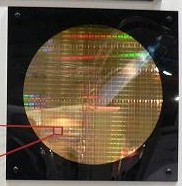
The flash memory will be available for mass consumption by July. The new process employed here uses a 32-gigabit chip, which is 4GB, and when stacked 8 tall, you end up with 32GB of total memory in one tiny space. While we don’t know who will receive the larger flash memory first, it does seem likely that Toshiba will be providing the memory for the iPhone 3.0. The company also notes that USB storage with the new memory capacity will be their first products to carry the 32 nm chip. Engadget Relevant Entries on SlashGear |
| Posted: 27 Apr 2009 01:07 PM PDT
 Ok, ok…so you can’t go to Newegg and buy it just yet. But GE announced just today that they’ve made some huge steps forward in the whole process, and now just have to figure out how to make their lab success work in affordable mass-produced products. Talk about the the ultimate in space saving! I think they will get to take over that slogan from the Tupperware people (or whoever has it right now). Richard Doherty, an analyst at the technology research firm Envisioneering says that "This could be the next generation of low-cost storage.” This “low-cost storage” is built on holographic technology. More and more on things like credit cards, you are seeing those 3D images on the card being used for security reasons. With holography, it can store the 1’s and 0’s of digital data also. The stored data is encoded in light patterns in light sensitive material. Then, to read the recorded data, the holograms act like a mirror letting you see the refracted light patterns. When a laser is shined on them, voila! Magic. The data “appears” and can be pulled and deciphered. Although the potential of holographic technology has been known for quite some time, since the early 1960s as a matter of fact, it hasn’t become the road most traveled mainly due to cost factors. But with this latest development by GE, many analysts believe that could be changing. This is due in large part to GE researchers taking the path less traveled in their approach. They use what is called microholographic storage. This storage depends on less complex, tinier holograms than previously concentrated on. The biggest challenge for the research team was to find a way to allow these smaller holograms to reflect enough light. Their GE lab in NY made the breakthrough—use a 200-fold increase in the reflective power. This increase puts them at the lower range of light reflections that are readable by current Blu-ray players. "We're in the ballpark," said Brian Lawrence, the scientist who leads GE's holographic storage program. "We've crossed the threshold so we're readable." With this approach, the holograms are scattered over the disc kind of like they are on CDs, DVDs and Blu-Ray discs. So, the same player could read them all. The big difference here is storage. While a standard DVD holds 5-9 gigabytes of data, and a Blu-ray comes in 25 or 50-gigabytes flavors, a microholographic disc could hold a whopping 500 gigabytes. But of course, the bottom line to many is “how much is this gonna cost?” When Blu-ray first came out in 2006, it cost about $1 a gigabyte for a 25-gigabyte disc. It’s about half that now. GE predicts that when their product is introduced (and they are thinking about 2011 or 2012), that holographic discs are going to cost way less than that…more like 10 cents per gigabyte..and keep falling. They plan to market and sell to places like TV networks, medical researchers and movie studios before heading on to the corporate and consumer market. But they believe the time is near. And I think Bert Hesselink, a Stanford professor and expert in the field summed it up well. “"If this can really be done, then GE's work promises to be a huge advantage in commercializing holographic storage technology.” via: |
 The hottest topic on Twitter right now is the Swine Flu outbreak. The #swineflu tag has exploded and become one of the top 2 trending topics on Twitter search. Swine Flu has killed over 60 people in Mexico and cases have been discovered here in several states, including California, Texas, and New York. None of the people stricken here in the U.S. are seriously ill, and only 20 cases total have been diagnosed.
 Just two months ago we were talking about in a limited capacity.
| You are subscribed to email updates from J Gadgets To stop receiving these emails, you may unsubscribe now. | Email delivery powered by Google |
Inbox too full?  Subscribe to the feed version of J Gadgets in a feed reader. Subscribe to the feed version of J Gadgets in a feed reader. | |
| If you prefer to unsubscribe via postal mail, write to: J Gadgets, c/o Google, 20 W Kinzie, Chicago IL USA 60610 | |

0 komentar:
Posting Komentar